



Not everything
that works
still fits.
SHANE SIVA
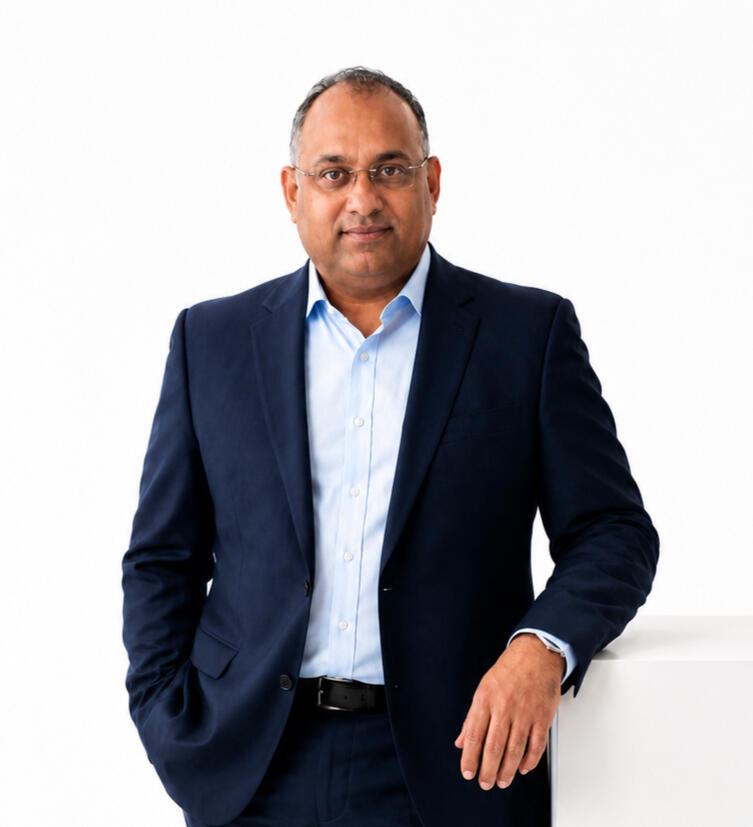
For moments when performance is intact, but something inside is asking for clarity.
At some point,
capability stops being the issue.
For many high performers, the shift is quiet.
Things still work.
Results still come.
Nothing appears broken.And yet—something no longer fits.
It doesn’t arrive
as failure.
It arrives as effort that feels heavier than it should.
As decisions that take more than they give.
As strengths applied faithfully, with less return.Most people respond by adjusting.
Optimizing.
Enduring.But endurance and alignment are not the same.
What I’ve noticed
time and time again...
High performers rarely lack discipline.
They lose orientation.Clarity doesn’t vanish.
It erodes—slowly, inside competence.Transitions don’t always announce themselves.
Sometimes they arrive as success,
that no longer feels coherent.
This is about
seeing clearly.
Not faster.
Not louder.
More honestly.About noticing when strength becomes strain.
When resilience turns into self-management.
When the next chapter can’t be entered,
the same way the last one was built.
There’s no urgency here.
No diagnosis.
No prescription.Just space to notice what may already be present.
WHERE THIS APPLIES AT WORK
When leadership still works—but no longer feels clean.Decisions remain sound.
Responsibility is carried.
Results continue to arrive.Yet effort no longer compounds the way it once did.Clarity exists, but ease has thinned.This inner work should begin at that point.
If you want to go further
Seeing clearly is a leadership skill.Not the kind gained through more information,
but through noticing where perception has quietly narrowed.
These essays examine what happens beneath sustained performance.Not breakdowns.
Not burnout.But the subtle shifts that occur when responsibility is carried for a long time.
What's possible section reflects a deeper shift in how growth unfolds, when we least expect it.One that often appears after capability is no longer the constraint.When growth stops looking like expansion.Explore the exciting next phase of your growth.
This work shows up in different ways.
Sometimes in reflection.
Sometimes in conversation.When clarity wants company,
you’ll find me here.




SEEING CLEARLY
Clarity doesn't
add anything.
It separates what's
already there.

Confusion is often treated as a problem.
Something to fix.
Something to move past.But often, confusion appears for a simpler reason:Something familiar has stopped working ,
as well as it once did.
Momentum continues.
Competence holds.
Progress is still visible.Nothing is obviously wrong.And yet—something feels different.
For high performers, this can be easy to miss.
This moment is rarely dramatic.
Nothing collapses.
Nothing demands immediate action.Work continues.
Responsibility remains.What changes is quieter.Effort takes more presence.
Decisions require more care.
The same strengths still operate—
just with less ease.You can still perform.But the experience feels slightly off.
At this point, many people look for more clarity.
A better plan.
Sharper focus.
A cleaner strategy.So they adjust.
They optimize.
They keep moving.Sometimes that helps.Sometimes, something else is asking to be noticed.
That something is orientation.
Orientation doesn’t tell you what to do.
It helps you recognize where you are.When orientation is clear, choices feel proportionate.
When it isn’t, even good decisions feel heavier than expected.This is why understanding more doesn’t always bring ease.
Why progress can continue—yet feel less satisfying.
Transitions often live here.
Not as endings,
but as shifts between phases.The posture that once fit still works—
it just fits less naturally.That isn’t a problem.It’s information.
Seeing clearly begins by
letting that information register.
Not rushing to interpret it.
Not trying to resolve it immediately.Simply noticing where effort has replaced ease.
Where resilience has turned into management.
Where competence continues,
but flow has softened.This isn’t failure.
It’s recalibration.
Clarity, in moments like this,
tends to return gradually.
Through observation rather than analysis.
Through patience rather than pressure.
Through allowing familiar assumptions to loosen.Not to abandon what worked—
but to make room for what fits now.
This work isn’t about
changing direction abruptly.
It’s about restoring orientation—
so movement feels natural again,
Decisions regain their lightness.
And effort aligns with the moment,
rather than pushing against it.
Some people move through this quickly.
Others pause longer.
If you find yourself here, nothing needs fixing.
Just something worth noticing.
IF YOU WANT TO GO FURTHER
Seeing clearly unfolds through seven short essays.Each explores a different way clarity becomes distorted—not through failure, but through success sustained over time.




ESSAYS & REFLECTIONS
Some thoughts
need space
before they need
words.

These essays aren’t meant to be consumed quickly.They’re written for
moments when something familiar
stops explaining your experience.You can begin anywhere.
When Endurance
Masquerades as Resilience
On the hidden cost of strength
applied too long.
THE QUIET COST OF
ALWAYS BEING CAPABLE
On competence, responsibility,
and the weight of reliability.
WHY CONTROL WORKS
UNTIL IT DOESN'T
On control, coherence,
and limits of effort.
Transitions Need Orientation
Not Urgency.
On the value of pause between
one phase ending and another beginning.
When Success Stops
Explaining Your Experience
On outgrowing the narratives
that once made sense.
Clarity Isn’t Missing.
Alignment Is.
On knowing more without feeling better—
and why that happens.
The Work That
Doesn’t Look Like Work
On the phase of effort
that can’t be optimized.
Did something here clarify rather than resolve?
We can sit with it briefly.




When Endurance
Masquerades as Resilience
The hidden cost of strength
applied too long.
High performers learn this early —
Play hard or go home.There are constant reminders:
Stay strong.
Push through.
Tough it out.
No pain no gain.It’s coded into our leadership DNA.
For a long time, endurance works.
And it builds careers.It earns trust.
It creates reliability.
It lets you hold complexity,
while others step back.But endurance has a shadow.
At some point, what felt like resilience,
begins to feel heavy.Not dramatic.
Not broken.
Just dense.The work still gets done.
Results still show up.From the outside, nothing looks wrong.
Internally, something shifts.Decisions take longer.
Recovery takes more effort.Strengths that once created momentum,
now require management.This is often misread.As fatigue.
As stress.
As a systems problem.So we optimize.
We rest harder.
We plan better.
We discipline ourselves more carefully.But endurance and resilience aren’t the same.Resilience restores.
Endurance consumes.Resilience adapts.
Endurance resists.The danger isn’t failure.
It’s endurance succeeding,
long after it should have evolved.Many arrive here quietly.
Not through collapse.
But through coherence thinning.The question isn’t
“How much longer can I hold this?”
It’s
“Why am I still holding it this way?”That isn’t weakness.
It’s orientation.And when orientation returns,
the work changes.
It feels easier.
Almost effortless.Now you are truly resilient.
No matter what.




THE QUIET COST OF
ALWAYS BEING CAPABLE
Competence, responsibility,
and the weight of reliability

Capability is rarely questioned.It is rewarded early.
Trusted quickly.
Relied upon often.For many people, it becomes an identity,
long before it becomes a burden.You are the one who figures it out.
Who carries more than a fair share.
Who absorbs complexity without complaint.Over time, expectations shift.
Not through demand.
But through relief.Others lean back.
You lean in.
And because you can, you do.Nothing feels wrong.
You remain competent.But something changes underneath.
Responsibility stops feeling neutral.It begins to accumulate.
Not as stress.
But as weight.
Quiet weight.
The kind that does not announce itself.Capability keeps paying dividends.
You are respected.
So when the cost appears,
it is easy to misread.But the issue is not workload.
It is not competence.It is orientation.
Capability without recalibration turns inward.What once created freedom
now requires management.Nothing is visibly broken.One day, something small appears.
You solve problems efficiently.
But without relief.This is not failure.
It is a signal.Capability has outpaced alignment.Alignment does not come from doing more.It comes from deciding,
what no longer needs to be carried alone.




WHY CONTROL WORKS
UNTIL IT DOESN'T
Control, coherence and
limits of effort
Control is often misunderstood.It’s rarely about dominance.
For most high performers, it begins as care.You anticipate.
You structure.
You reduce variability.Control creates order.
It stabilizes outcomes.For a long time, it works.But control has a lifecycle.Coherence becomes maintenance.
Then, quietly, defence.The shift is subtle.
You don’t become controlling.
You become vigilant.
You check more often.
Stay close to decisions.
Hold context others don’t see.Not from distrust,
but from knowing what happens,
when things drift.The problem is,
control doesn’t announce,
when it’s outlived its use.
It keeps working.
The system holds.
Outcomes remain acceptable.What changes is internal.
Ease fades.
Attention narrows.
Familiar work takes effort.
Control, held too long, demands presence.
It doesn’t rest.And because it once solved real problems,
it’s hard to question.You call it responsibility.
Or leadership.
Or care.But control isn’t meant to last.
It prepares the ground for what comes next.When it becomes the default, clarity thins.You’re still effective.
Still capable.
Still respected.But the work feels enclosed.Then the question shifts.
Not “How do I maintain this?”
But “What no longer needs my protection?”Letting go of control isn’t retreat.
It’s stepping aside
for what’s ready to move,
without you holding it together.




Transitions Need Orientation
Not Urgency
On the cost of forcing clarity
before it is ready.

Most transitions are rushed.Not because something is wrong.
But because stillness feels unproductive.We’re taught to move quickly,
when conditions change.
To decide.
To act.
To return to momentum.So when one phase ends,
and the next hasn’t begun,
discomfort sets in.You look for direction.
For plans.
For answers.But transitions aren’t problems to solve.They’re moments to orient.What makes them difficult is that,
orientation doesn’t look like progress.There’s no visible output.
No immediate relief.
Only questions that don’t resolve on command.So urgency fills the space.
We decide early.
We move forward before the ground is clear.Often, this works.
But later, misalignment appears.In decisions that feel slightly off.
In effort that doesn’t compound.
In motion without ease.A transition isn’t asking for speed.
It’s asking for perspective.What’s ending needs to be seen clearly.
What’s emerging needs room.Orientation only arrives,
when you stop trying to get somewhere,
and start noticing where you are.That doesn’t mean waiting forever.It means resisting the urge to rush clarity.
When orientation is found,
movement becomes obvious.
Not forced.
Not anxious.
Just clean.And movement that begins this way,
rarely needs correction later.




When Success Stops
Explaining Your Experience
Outgrowing the narratives
that once made sense.

Success is a useful story.It explains effort.
Justifies sacrifice.
Creates momentum.For a long time, it fits.You know what you’re building.
Why it matters.
What comes next.Then, quietly, it stops explaining things.Not because success disappears.
But because the experience underneath it changes.The outcomes still arrive.
Recognition remains.
Externally, nothing breaks.Internally, something feels unaccounted for.There’s no clear problem.
Nothing obviously wrong.Yet the story no longer covers the full experience.Wins don’t land the same way.
Decisions feel heavier than expected.
Progress continues—but without resonance.This is often confusing.You tell yourself to stay focused.
To be grateful.
After all, the story still works.But a story that works can still be incomplete.When success stops explaining your experience,
it isn’t a failure of ambition.
It’s a signal of evolution.What carried you here isn’t wrong.
It’s just no longer sufficient.At this point, pushing harder rarely helps.
Neither does rewriting the goal.What’s needed isn’t a new destination.
It’s a clearer orientation.One that reflects who you are now—
not who you were when the story began.When that orientation emerges,
success doesn’t disappear.It simply changes shape.
And begins to fit again.




Clarity Isn’t Missing. Alignment Is.
Knowing more without feeling better—
and why that happens
When things feel unclear,
we usually assume we need more information.More data.
More analysis.
More thinking.So we look harder.
We read more.
We ask better questions.Often, this helps.But sometimes, clarity keeps increasing
while ease keeps disappearing.You understand the situation.
You can explain it.
You know the tradeoffs.Yet movement feels difficult.This is usually misdiagnosed as indecision.
Or lack of confidence.
Or fatigue.But the issue isn’t clarity.It’s orientation.Orientation answers a different question.
Not “What’s going on?”
But “Where am I in relation to it?”Without orientation, clarity piles up.
Nothing integrates.You know more.
But you don’t feel steadier.Orientation doesn’t come from thinking harder.
It comes from locating yourself in the landscape.What matters.
What no longer does.
What you’re carrying unnecessarily.Once orientation is found, movement simplifies.Not because there’s less complexity.
But because effort stops pointing in competing directions.Clarity informs.
Orientation aligns.And alignment, once restored,
creates momentum without force.




The Work That
Doesn’t Look Like Work
The phase of effort
that can’t be optimized.

There’s a phase of effort that’s hard to explain.Nothing obvious is being produced.
No visible progress.
From the outside, it can look like nothing is happening.But something is.Attention shifts.
Old assumptions loosen.
Patterns that once felt fixed begin to soften.This kind of work doesn’t respond to pressure.
It can’t be rushed.
It doesn’t accelerate on command.So it’s often ignored.We stay busy instead.
We optimize.
We apply effort where it’s visible.
That kind of work feels safer.But the work that doesn’t look like work,
is often where real change begins.It happens between decisions.
Between conversations.
Between identities that no longer fit,
and ones that haven’t formed yet.This phase asks for presence.
Not action.Patience.
Not persistence.That’s why it’s uncomfortable.There’s no immediate feedback.
No proof that it’s working.And yet, without it,
the next phase lacks coherence.When this work is skipped,
movement resumes.
But alignment doesn’t.When it’s honoured, movement arrives quietly.
Already oriented.The mistake is thinking this phase is passive.It isn’t.It’s integrative.It’s the work of letting things settle
before asking them to move again.
THRESHOLD




WHAT BECOMES POSSIBLE
WHEN GROWTH CHANGESMost of us leaders are taught this.Measure growth in a specific way—
More responsibility.
More scale.
More impact.I followed that path.Fortune 500 environments.
CEO and CFO roles.
Decisions that shaped people, capital, and long-term outcomes.By all external measures, I had arrived.Then something shifted.That shift didn’t come through work.
It emerged from learning about conscious parenting.Nothing broke.
Nothing failed.But something became visible.
A DIFFERENT ORIENTATIONCapability was never the issue.
Neither was ambition.What changed was the cost.The same strengths still worked—
they just asked more in return.That moment is easy to misread.It can look like plateau.
Or loss of edge.
Or a need to push harder.What I found instead was simpler.Growth doesn’t stop.
It changes form.At a certain stage, leadership isn’t about expansion.
It’s about integration.The boundary between work and life stops holding.
Not as an idea—
as a reality.Decisions affect the body.
Patterns in the body affect decisions.Once that’s clear, the work changes.
WHAT BECOMES POSSIBLEFor leaders here, the work isn’t corrective.
It’s orienting.When orientation shifts:
• Strength no longer needs reinforcement
• Success stops requiring quiet trade-offs
• Leadership feels precise, not heavyNot softer.
Clearer.Often more effective than before.
A QUIET TAKEAWAYIf it feels like you’ve reached the edge of growth,
it may not be the end.It may be the beginning of a different quality of it.One where leadership no longer competes with life—
and where the work you do is something you stand in,
not something you carry.




WHERE THIS CONTINUES

This work is lived.
It’s real.
Momentus is one expression of it.
It’s where this way of seeing is applied in real life.
With leaders and teams.
Inside real organizations.I also lead companies we create, directly.
At Yantrax Global.
And at Grid Independence.Not as an advisor on the sidelines.
But inside the work, as the business' CEO.
Building teams.
Making capital decisions.
Navigating uncertainty.
Holding responsibility.That context matters.
It keeps this kind of work honest, real, and grounded.The same thinking shows up elsewhere.In conversations with founders.
With executives in transition.
With leaders who sense something is off.Some of it is shared publicly.
Mostly through short reflections on LinkedIn.
A way to stay connected.These aren’t separate paths.They’re the same “way of being.”
Expressed in different places.
If something here resonates,
the next step is simple.A conversation.Let's connect.
Email:
LinkedIn: